
Before You Book the Cheaper Hotel, Check These 8 Things
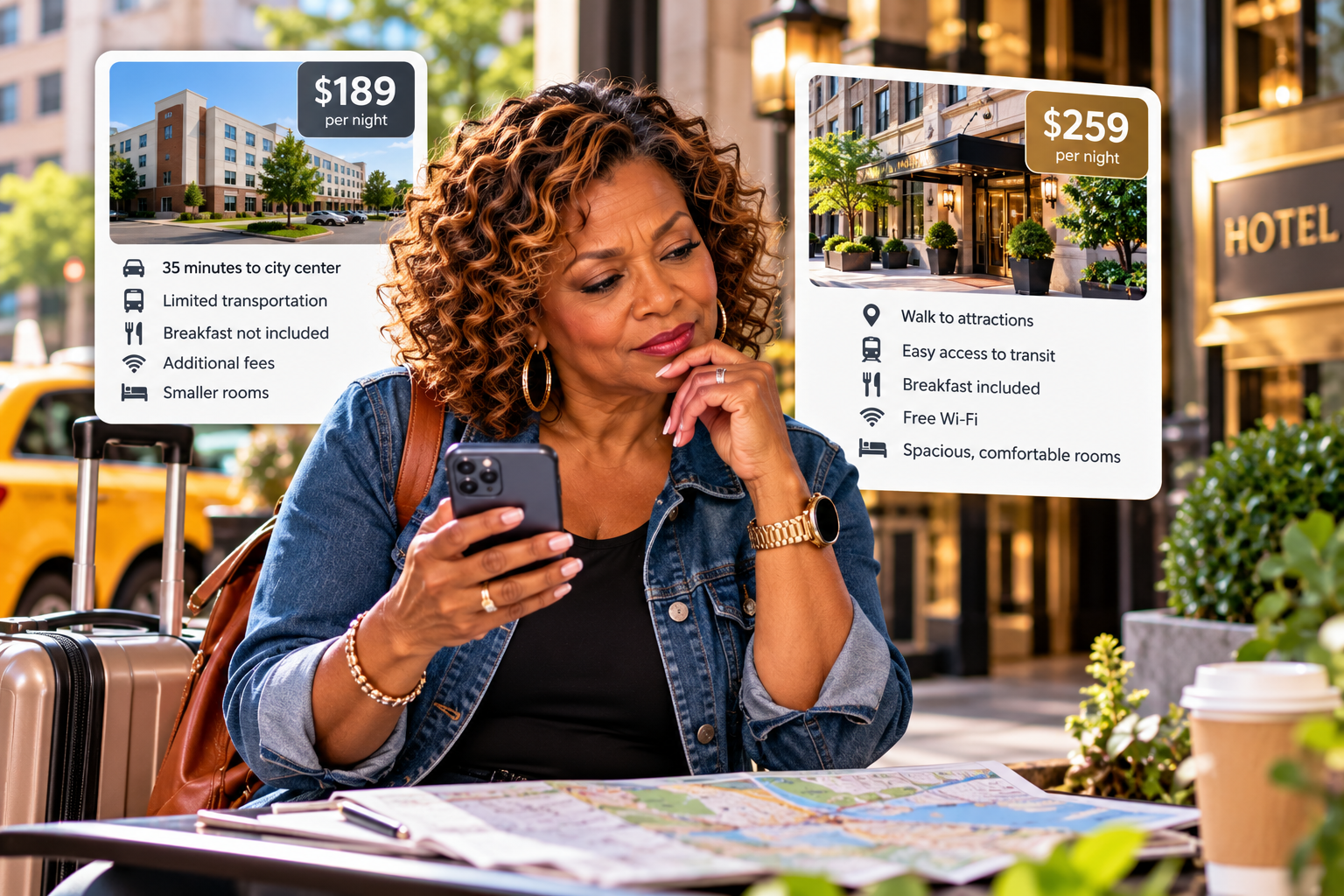
You found two hotels.
One is $189 a night. The other is $259. Easy decision, right? Maybe not. That $70 you think you are saving can disappear mighty fast when the cheaper hotel is 35 minutes from everything you came to see, breakfast costs extra, taxis are adding up, and getting back to your room after dinner feels like another excursion. Suddenly, that “more expensive” hotel starts looking like the better deal. Knowing how to choose a hotel means looking at more than the nightly rate. The smartest travelers compare what they are actually getting for their money. Before you hit BOOK on the cheaper room, check these eight things first.1. Check the Location — Not Just the Address
The first thing to compare is where the hotel actually sits in relation to what you plan to do. A hotel can technically be “in Paris,” “in London” or “near downtown” and still have you spending a chunk of every day getting where you actually want to be. Pull up the map. How far is the hotel from the attractions you plan to visit? Are restaurants nearby? Can you walk somewhere for dinner? Is public transportation convenient? And do not automatically assume a 20-minute walk is no big deal. A 20-minute walk after sightseeing all day, in 90-degree weather, wearing your good dinner shoes, can feel very different from the 20-minute walk you imagined sitting at home. When learning how to choose a hotel, location should be one of the first things you compare.2. Calculate What Transportation Will Really Cost
That cheaper hotel may save you $50 or $75 a night. Now add up the transportation. A taxi into the city in the morning. Another one back to the hotel. A rideshare to dinner. Another ride back afterward. Do that for five or six days and there goes your hotel savings. Even if you plan to use trains or buses, look at how convenient they actually are. Is the station two blocks away or a 15-minute walk? Will you need to transfer multiple times? Does transportation stop running before you are likely to return at night? A hotel that makes getting around easier can save money, but just as importantly, it can save vacation time. And vacation time counts too.3. Find Out What Is Actually Included
Two hotel rates can look very different once you start adding everything up. Before booking, compare what is included in each rate. Look for:- Breakfast
- Wi-Fi
- Resort or destination fees
- Parking
- Airport transportation
- Bottled water
- Access to hotel facilities
- Taxes and service charges
4. Look at the Room You Are Actually Booking
Hotel photography is very good at showing you the lobby, rooftop pool and prettiest suite in the building. That does not mean you are staying in any of them. Look at the exact room category you are booking. How big is it? What size are the beds? Is there a refrigerator? Is there adequate storage? Does the bathroom have a walk-in shower or a high tub? Does the hotel have elevators? Is the air conditioning individually controlled? These details become especially important on longer vacations. Nobody wants to discover after check-in that there is barely enough room to walk around the suitcase.5. Read the Reviews Differently
Do not just look at the star rating. Read recent reviews and look for patterns. One guest complaining about something may mean nothing. Twenty guests mentioning the same thing? Pay attention. Look specifically for comments about:- Cleanliness
- Noise
- Bed comfort
- Air conditioning
- Elevators
- Location
- Staff responsiveness
- Transportation
- Breakfast
- Neighborhood conditions
6. Think About What Happens After a Long Day
Everybody pictures themselves enthusiastically sightseeing from morning until night. Then day three arrives. Your feet are tired. You have been out since breakfast. You bought three things you did not plan to buy. And now you would really like to go back to the hotel for an hour before dinner. This is where location and convenience suddenly become worth something. A centrally located hotel may allow you to return to your room, freshen up, change clothes and head back out. A hotel 45 minutes away? You may decide it is not worth going back at all. When comparing hotels, think about how you will actually travel—not how energetic you imagine you will be every minute of vacation.7. Consider the Neighborhood After Dark
A hotel can have a great rate and decent rooms and still be in a location that becomes inconvenient once the sun goes down. Check what is around the property. Are restaurants open nearby in the evening? Are there shops or businesses? Is transportation readily available? Would you feel comfortable returning to the hotel after dinner? This is not about assuming a neighborhood is unsafe because it looks unfamiliar. It is about understanding whether the location works with the way you plan to travel. Convenience after dark matters.8. Ask Yourself What the Extra Money Is Buying
Here is the question that makes the decision easier: What exactly am I getting for the extra money? If an additional $60 per night gets you:- A central location
- Breakfast
- Easy transportation
- A larger room
- Better reviews
- More responsive service
- Restaurants within walking distance