
5 Black Heritage Travel Experiences Every Black Traveler Should Have
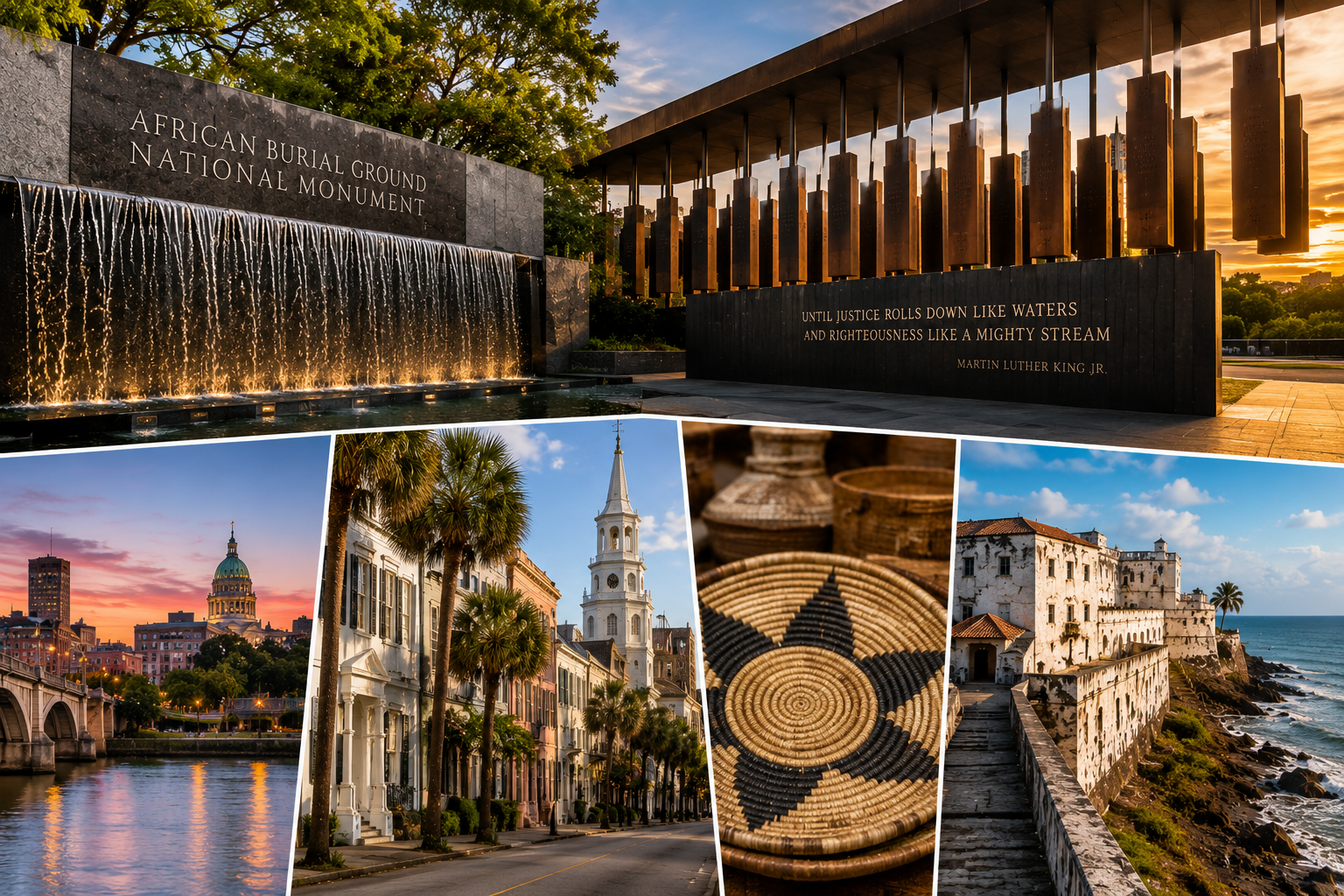
Black heritage travel is about more than visiting a destination. It's about connecting with the people, places, and stories that shaped our history. From Harlem to Ghana's Cape Coast Castle, these powerful destinations offer opportunities to experience Black culture, resilience, and heritage in a way that no book or documentary can match.
Juneteenth reminds us that freedom has a story.
A story of resilience. A story of sacrifice. A story of people who refused to give up hope, even when the odds were stacked against them.
While books and documentaries can teach us history, there is something powerful about standing in the places where that history unfolded. Walking the same streets. Visiting the same landmarks. Seeing the places where ordinary people made extraordinary contributions that continue to shape our world today.
If you're looking for meaningful travel experiences that go beyond sightseeing, these five destinations deserve a place on your bucket list.
Why Black Heritage Travel Matters
Black heritage travel allows us to move beyond reading history and actually experience it. Standing in the places where pivotal moments occurred creates a deeper connection to our culture, our communities, and our collective story.
These destinations aren't just places to visit. They're places to reflect, learn, and celebrate the resilience and achievements of people of African descent around the world.
1. African Burial Ground National Monument, New York City
Most visitors come to New York City for Broadway, Times Square, and world-famous attractions.
Few realize that one of the most important Black history sites in America sits in Lower Manhattan.
The African Burial Ground National Monument honors more than 15,000 Africans and African Americans who lived and worked in colonial New York during the 17th and 18th centuries. Many were enslaved, and for generations their stories remained largely untold.
Today, visitors can explore the memorial, educational exhibits, and visitor center that help bring this hidden chapter of American history to light.
Standing at the memorial is a powerful reminder that Black history is woven into the foundation of America itself.
2. Harlem, New York
Harlem is more than a neighborhood.
It is a symbol of Black excellence, creativity, entrepreneurship, and cultural influence.
During the Harlem Renaissance, writers, musicians, artists, and activists transformed the neighborhood into the heartbeat of Black culture in America. The impact of that movement can still be felt today.
Visitors can explore the legendary Apollo Theater, visit the Schomburg Center for Research in Black Culture, enjoy iconic soul food restaurants, and walk streets that helped shape American music, literature, and civil rights history.
Harlem remains one of the most important destinations in Black heritage travel because it showcases the lasting influence of Black art, literature, music, and community.
You don't simply visit Harlem.
You experience it.
3. Montgomery, Alabama
Few cities tell the story of the Civil Rights Movement more powerfully than Montgomery.
This is where Rosa Parks refused to surrender her seat.
This is where the Montgomery Bus Boycott changed history.
This is where a young Martin Luther King Jr. emerged as one of the nation's most influential leaders.
Today, visitors can explore the Legacy Museum and the National Memorial for Peace and Justice, both created by the Equal Justice Initiative. These powerful experiences provide an honest look at America's history of racial injustice and the ongoing pursuit of equality.
Montgomery isn't always an easy destination to visit emotionally.
But it may be one of the most important.
4. Charleston, South Carolina
Charleston is known for its beautiful architecture, cobblestone streets, and Southern charm.
But beneath its beauty lies a deeper story.
For many African Americans, Charleston represents one of the most significant entry points into the history of slavery in the United States.
Visitors can learn about Gullah Geechee culture, explore historic sites connected to the transatlantic slave trade, and gain a deeper appreciation for how African traditions survived and evolved in America.
The city's influence can still be seen in its food, language, music, and cultural traditions.
Every corner of Charleston offers an opportunity to better understand the resilience of those who came before us.
5. Cape Coast, Ghana
Some journeys change the way you see the world.
For many travelers, Cape Coast is one of them.
Located along Ghana's coastline, Cape Coast Castle served as one of the major holding points for Africans forced into the transatlantic slave trade.
Walking through the dungeons and standing before the infamous "Door of No Return" is an emotional experience that stays with visitors long after they return home.
For many travelers, Black heritage travel reaches its most emotional point in Ghana, where history becomes personal and unforgettable.
But Ghana is not only about looking back.
It is also about celebrating strength, resilience, culture, and connection.
For many members of the African diaspora, visiting Ghana feels less like a vacation and more like a homecoming.
The Power of Traveling Through History
Travel can entertain us.
Travel can relax us.
Travel can introduce us to new foods, new cultures, and new friendships.
But travel can also deepen our understanding of who we are and where we come from.
Black heritage travel can educate us, inspire us, and help us better understand the journey that brought us here.
The destinations on this list are more than tourist attractions. They are living reminders of the struggles, triumphs, and contributions that helped shape our communities and our culture.
Juneteenth reminds us that freedom has a story.
Travel allows us to stand where that story happened.
And sometimes, the most meaningful journeys are the ones that help us better understand our past while inspiring our future.
Frequently Asked Questions About Black Heritage Travel
What is Black heritage travel?
Black heritage travel focuses on destinations that highlight African American history, African culture, civil rights landmarks, and significant historical sites connected to the Black experience.
What are the best Black history destinations in the United States?
Many travelers consider Harlem, Montgomery, Charleston, and the African Burial Ground National Monument among the most important destinations for exploring Black history in America.
Why do people visit Cape Coast Castle in Ghana?
Cape Coast Castle provides visitors with an opportunity to learn about the transatlantic slave trade and connect with an important chapter of African and African American history.