
Great Migration of Black Americans: Why Movement Was Survival
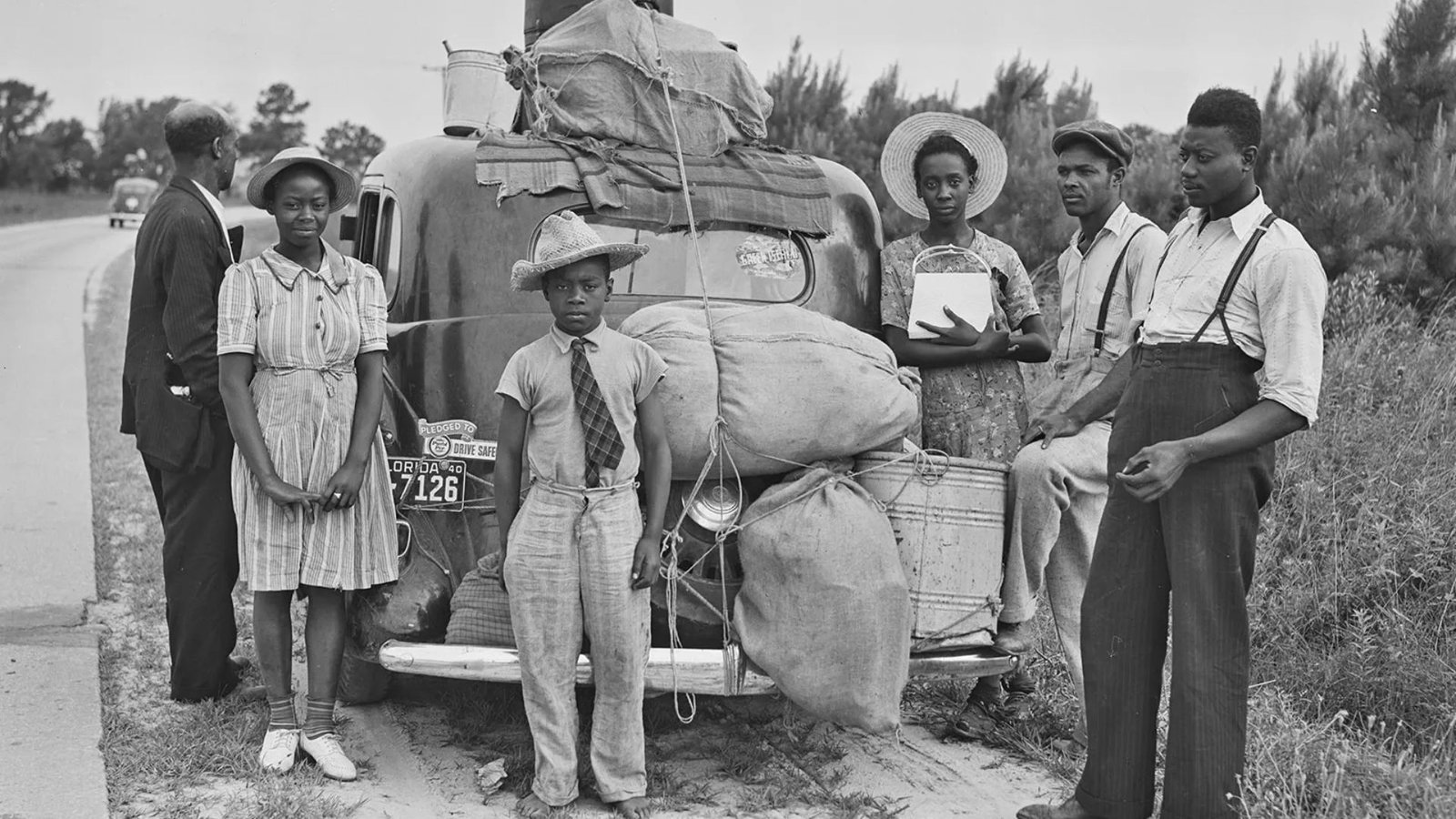
As Black History Month comes to a close, it feels right to reflect not just on leaders, but on one of the most powerful movements in American history.
Between 1916 and 1970, more than six million Black Americans left the rural South during what historians call the Great Migration of Black Americans — one of the most transformative movements in American history.
This wasn’t wanderlust.
It wasn’t curiosity.
It was survival.
Why Did Black Americans Leave the South?
The reasons were layered — and urgent.
After Reconstruction ended, Southern states enforced Jim Crow laws that legalized segregation and stripped Black citizens of voting rights and basic protections. Racial terror was not rare; it was public and intentional. Lynching was used as intimidation. Economic systems were designed to keep Black families dependent and indebted.
Most worked in agriculture, especially cotton, trapped in sharecropping arrangements that made wealth nearly impossible to build.
Then came another blow: the boll weevil infestation. In the 1910s, this small beetle devastated cotton crops across the South, collapsing already fragile economies. Crops failed. Income disappeared. Even those determined to endure segregation suddenly had no sustainable livelihood.
Staying became as dangerous as leaving.
The First Wave (1916–1940)
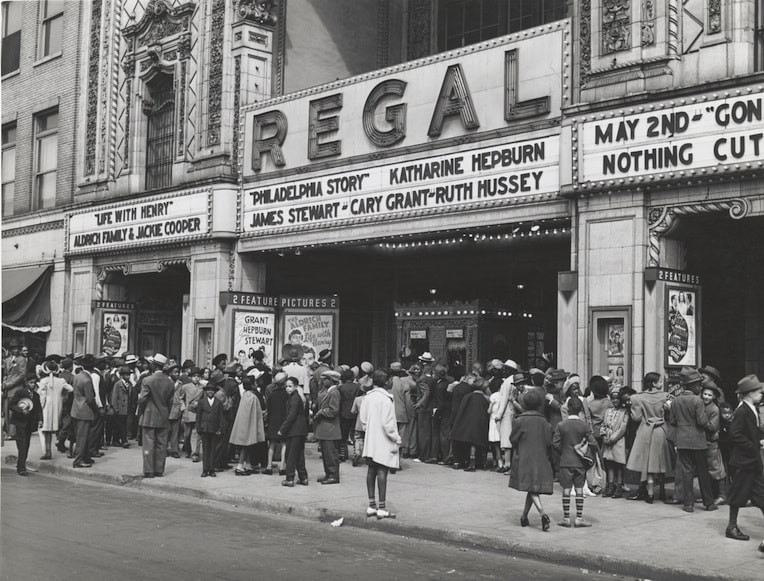
Information traveled through trusted networks. The Black newspaper The Chicago Defender published stories of opportunity. Pullman porters carried copies across state lines. Northern companies sent labor agents into Southern towns to recruit workers — sometimes paying for train tickets.
Southern officials tried to block departures. In some areas, Black men were arrested simply for gathering at train stations.
Leaving required courage.
And coordination.
The North Was Not Paradise
Migration did not end racial hostility — it relocated it.
In 1919, racial violence erupted in what became known as the Red Summer. Race riots broke out in cities including Chicago and East St. Louis as white residents resisted the growing Black population.
Housing discrimination followed. Restrictive covenants — legal agreements forbidding white homeowners from selling to Black families — shaped neighborhoods long before federal redlining policies formalized segregation.
The risks changed.
But so did the possibilities.
Higher wages.
Expanded education access.
Political voice.
Cultural transformation.
The Harlem Renaissance.
The rise of Motown in Detroit.
The growth of urban Black political leadership.
All were shaped by movement.
The Second Wave (1940–1970)
World War II sparked an even larger second wave. Defense industry jobs drew Black families west to cities like Los Angeles and Oakland, permanently reshaping American demographics.
By 1970, the geographic map of Black America had fundamentally changed.
And since the 1970s, another shift — often called the Reverse Migration — has seen many Black families move back to Southern cities like Atlanta and Houston, once again choosing movement strategically.
Movement has always meant something in our history.
What This Means for Us Now
For our grandparents, trains were not symbols of adventure.
They were lifelines.
They boarded with handwritten addresses and quiet prayers, hoping the next city would offer safety, wages, and dignity.
Today, when we move — whether across the country or across the ocean — it carries a different weight. We travel by choice. We travel for joy. We travel to expand our lives, not escape danger.
And that shift matters.
At Auntie-Approved Adventures, movement isn’t random. It’s intentional. It’s rooted in legacy. It honors the generations who moved because they had to — by allowing us to move because we want to.
That’s not comparison.
That’s gratitude.
A Reflection at the End of Black History Month
As this month closes, it’s worth remembering that travel in our history has not always been about adventure. Sometimes it has been about safety. Sometimes it has been about dignity. Sometimes it has been about claiming space.
The Great Migration reminds us that movement has power.
It can change a family.
It can shift a city.
It can alter a nation.
And sometimes, the bravest thing you can do is pack up and go.